
Our emissions are systematically recorded
As a family-run business, we take a holistic view of our responsibilities: beyond strict ESG criteria, people are at the heart of everything we do. To quantify our environmental impact, we calculate our Corporate Carbon Footprint (CCF) annually in accordance with the Greenhouse Gas Protocol. These transparent figures form the foundation on which we can take targeted action to protect the climate and ensure a healthy future for our team and society.
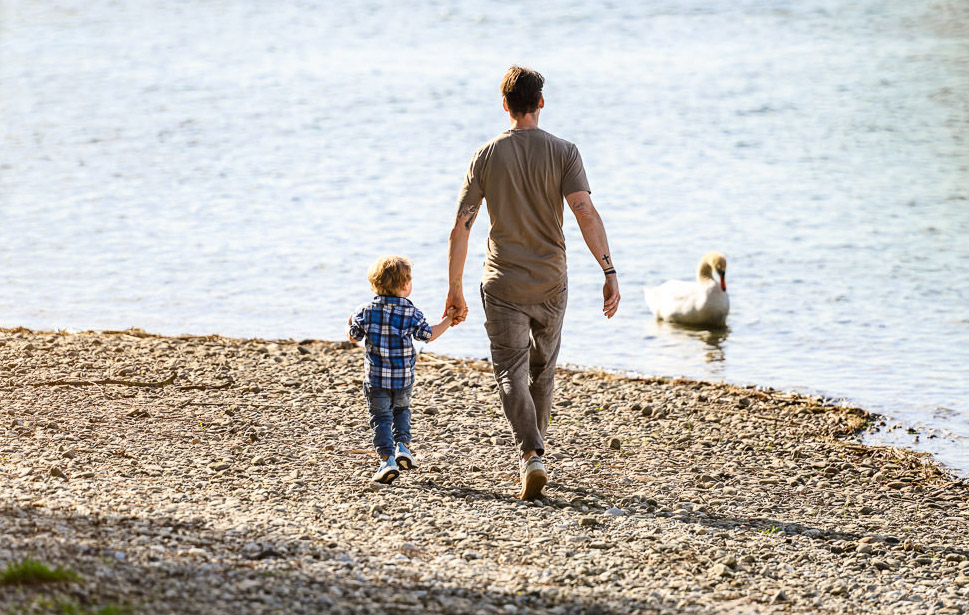
Total Corporate Carbon Footprint
The full report is available to download here.
Total of all recorded direct and indirect emissions per employee
A reduction from 7.39 t CO2e in 2024 to 6.42 t CO2e in 2025.
EMISSIONS OVERVIEW
0 t CO2e
Our direct emissions have been zero since we began recording them. These include, for example, emissions from fuel consumption – areas in which PROOX has no significant sources of emissions.
0,5 t CO2e (approx. 3 %)
Our emissions from electricity generation are minimal, as we rely entirely on sustainable hydroelectric power from Illwerke in our region of Vorarlberg.
21,43 t CO2e (über 97 %)
Der überwiegende Teil unseres Corporate Carbon Footprints entsteht in Scope 3. Diese indirekten Emissionen umfassen alle Treibhausgase, die nicht aus eigenen Anlagen oder dem direkten Energiebezug stammen, sondern entlang der vorgelagerten und nachgelagerten Aktivitäten unseres Unternehmens entstehen. Dazu zählen insbesondere Geschäftsreisen, Arbeitswege der Mitarbeitenden, eingekaufte Waren und Dienstleistungen sowie betriebliche Abfälle.
Supply Chain
REGIONAL SUPPLY PARTNERSHIPS
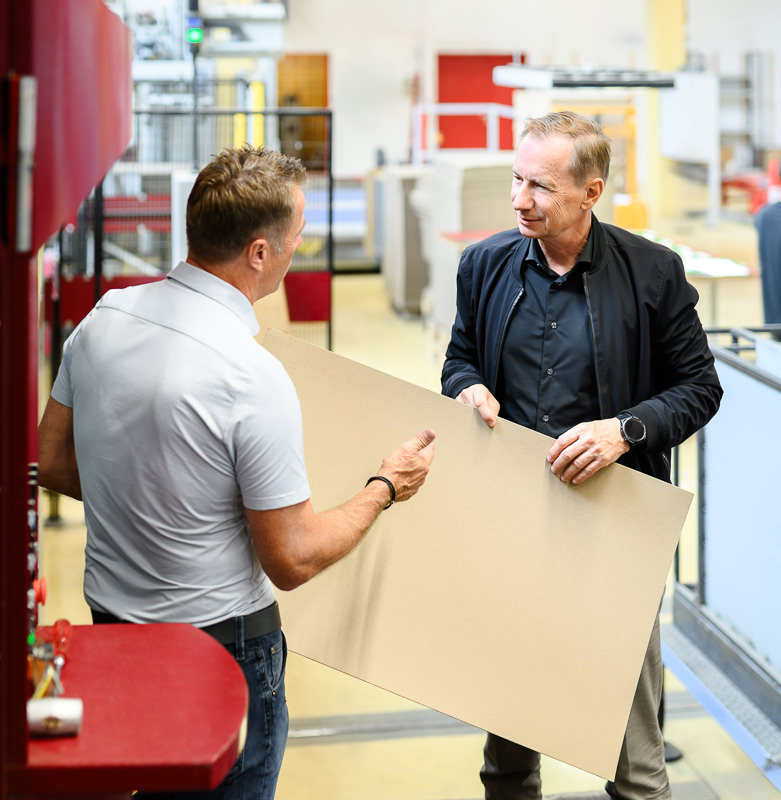
Short decision-making processes, stable partnerships and deep trust are at the heart of our strategic procurement. We are firmly committed to regional sourcing: our raw materials come almost exclusively from Austria and Germany. For our packaging, we work hand in hand with a company from the neighbouring municipality, which supplies us with recycled cardboard. Through this local partnership and our high in-house production rate, we actively protect the climate, improve our carbon footprint and, at the same time, secure valuable jobs in our region.
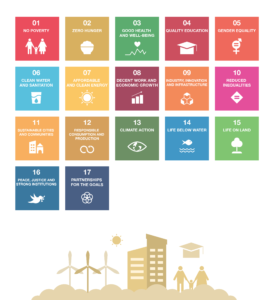
In this chapter, we take the following United Nations (UN) Sustainable Development Goals (SDGs) into account
_ SDG 12: Promoting sustainable value chains
_ SDG 8: Strengthening local economic structures
_ SDG 17: Collaborating with responsible partners
PROOX is committed to the
UN Sustainable Development Goals (SDGs)
We take comprehensive environmental and social responsibility across all areas of our business—from future-proof product development to strict ESG criteria. As a pioneer in sustainable restroom solutions, we align all our business activities with the United Nations’ (UN) 17 Sustainable Development Goals (SDGs).
In the individual chapters of our report, we set out in a transparent manner how we are implementing our environmental and social objectives in detail.
MOBILITY
FOCUS ON SUSTAINABLE PRACTICES
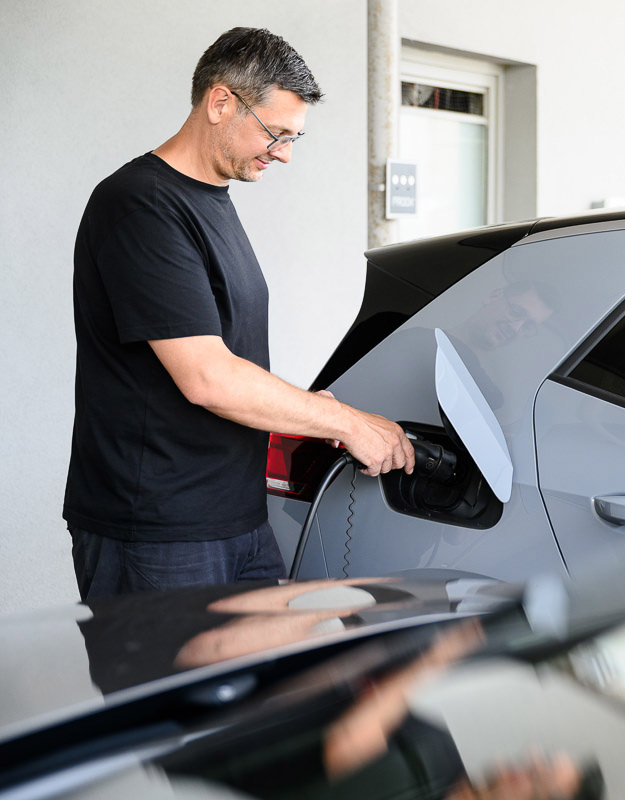
Employees’ commutes to work account for a significant proportion of our emissions – around 17 %. We encourage our staff to switch to environmentally friendly alternatives. For example, we offer our staff the use of our charging infrastructure for their electric cars at a discounted rate. Furthermore, we encourage them to switch to cycling through a company-run competition as part of the ‘Österreich radelt’ initiative and our workplace health promotion programme.
In 2025, our staff cycled a total of over 3,000 kilometres. Through these measures, we have reduced our emissions in this category by approximately 18%, from 4.42 t CO₂e in 2024 to 3.62 t CO₂e in 2025.
In this chapter, we take the following United Nations (UN) Sustainable Development Goals (SDGs) into account
_ SDG 03 Good Health and Well-being
_ SDG 7 Affordable and Clean Energy
_ SDG 13 Climate Action
PROOX is committed to the
UN Sustainable Development Goals (SDGs)
We take comprehensive environmental and social responsibility across all areas of our business—from future-proof product development to strict ESG criteria. As a pioneer in sustainable restroom solutions, we align all our business activities with the United Nations’ (UN) 17 Sustainable Development Goals (SDGs).
In the individual chapters of our report, we set out in a transparent manner how we are implementing our environmental and social objectives in detail.
Continuous improvement, acting with transparency
The figures from our life cycle assessment motivate us anew every day and serve as a valuable guide. They show us in black and white where we, as a team, can improve even further. We’ve achieved a great success when it comes to business travel: By consciously switching from cars to trains, we have radically reduced CO₂ emissions from 1.24 tonnes in 2024 to almost zero – namely 0.14 tonnes – in 2025. And if a car is absolutely essential for personal client visits, we travel 100% electrically using our own electric fleet.
Reducing emissions from business travel
Thanks to these measures, we were able to reduce our emissions in this category by approximately 18 %, from 4.42 t CO₂e in 2024 to 3.62 t CO₂e in 2025.
Our Contribution
Despite all these measures, there will always be unavoidable emissions – particularly in Scope 3, over which we have no direct control. However, these emissions will continue to be reported transparently. We take responsibility for the remaining portion by supporting certified climate protection projects: we make a voluntary financial contribution to climate action and support a ClimatePartner combined project that links two levels of impact:
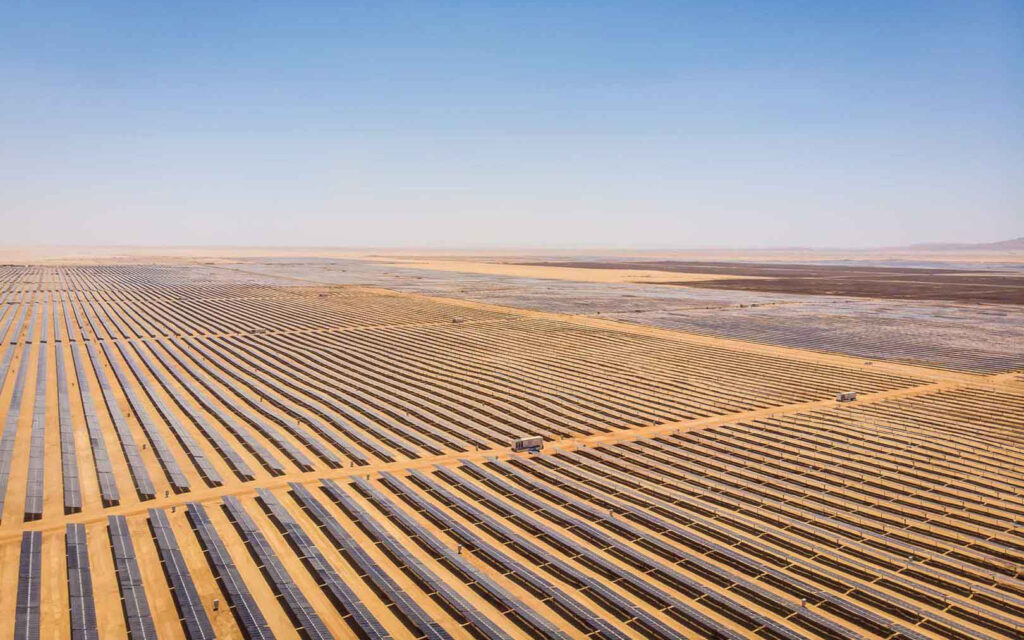
50-megawatt solar project in Togo
On the one hand, we are supporting the 50-megawatt solar project in Togo, which reduces dependence on firewood, charcoal and energy imports and helps achieve the goal of nationwide access to electricity.
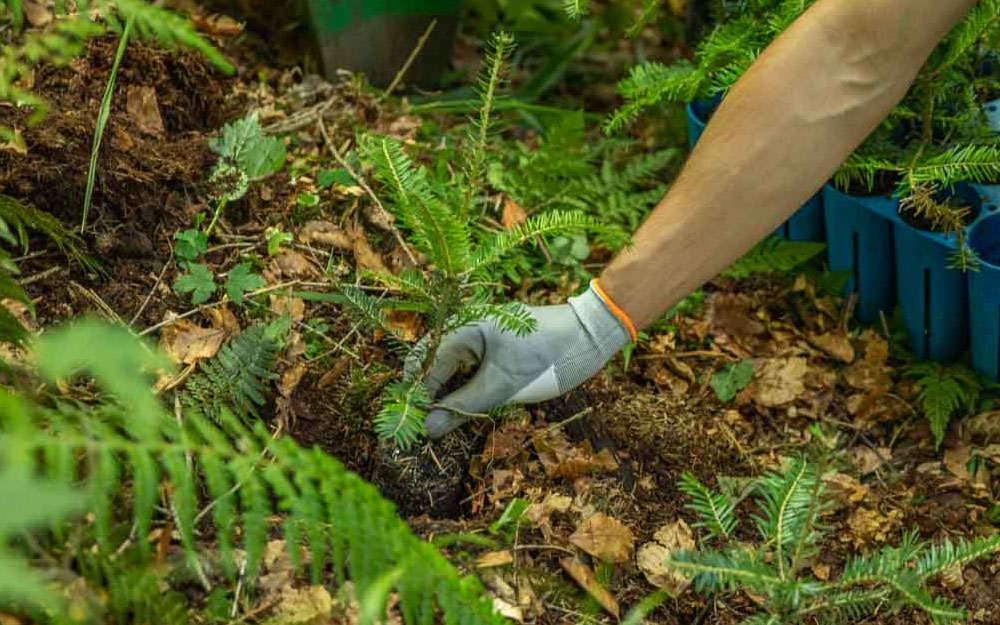
Tree planting in Germany
In addition, we promote regional engagement in Germany – specifically through tree planting and by supporting afforestation and forest conversion to more resilient mixed forests, with the aim of making our native forests more climate-resilient.

Our contribution can be tracked transparently at: fpm.climatepartner.com/tracking/2715-1001/en. In this way, we are also making a tangible contribution to climate protection – today and for the future.